"Isn't hardwood just hardwood?" is a question we get a lot, and it's a fair one. Solid and engineered hardwood can look nearly identical once installed, but they're built differently and perform differently depending on where in your home they're going. Here's a straightforward breakdown.
What Solid Hardwood Actually Is
Solid hardwood flooring is exactly what it sounds like: each plank is milled from a single piece of wood, all the way through. That construction is why solid hardwood has such a long reputation. Because there's real wood from top to bottom, it can be sanded down and refinished multiple times over its lifespan, which means scratches, wear patterns, or a dated stain color don't have to mean starting over. For homeowners planning to stay in their house for the long haul, that longevity is a big part of the appeal.
What Engineered Hardwood Actually Is
Engineered hardwood also has a genuine hardwood surface, so it looks and feels like real wood underfoot, but that surface layer is bonded on top of a multi-ply plywood core rather than being solid wood all the way through. That layered, cross-grain construction makes engineered hardwood significantly more dimensionally stable than solid wood, meaning it resists the expanding and contracting that comes with humidity changes more effectively. It can typically be refinished at least once or twice, depending on the thickness of its top wear layer, though not as many times as solid wood.
Where Each One Belongs in Your Home
Solid hardwood performs best in above-grade living spaces, like main-floor living rooms and bedrooms, where it isn't exposed to a concrete slab or excess moisture. Because of how it reacts to humidity, it isn't typically recommended for installation directly over concrete slabs, which describes a lot of Denton County homes. Engineered hardwood, on the other hand, can often be installed directly over a slab and holds up better in rooms where humidity is a bit less controlled, such as spaces near exterior doors or above a garage. If your home is slab-on-grade, which is common throughout North Texas, engineered is frequently the more practical route to get the look of real wood without the installation limitations of solid.
Look, Feel, and Resale
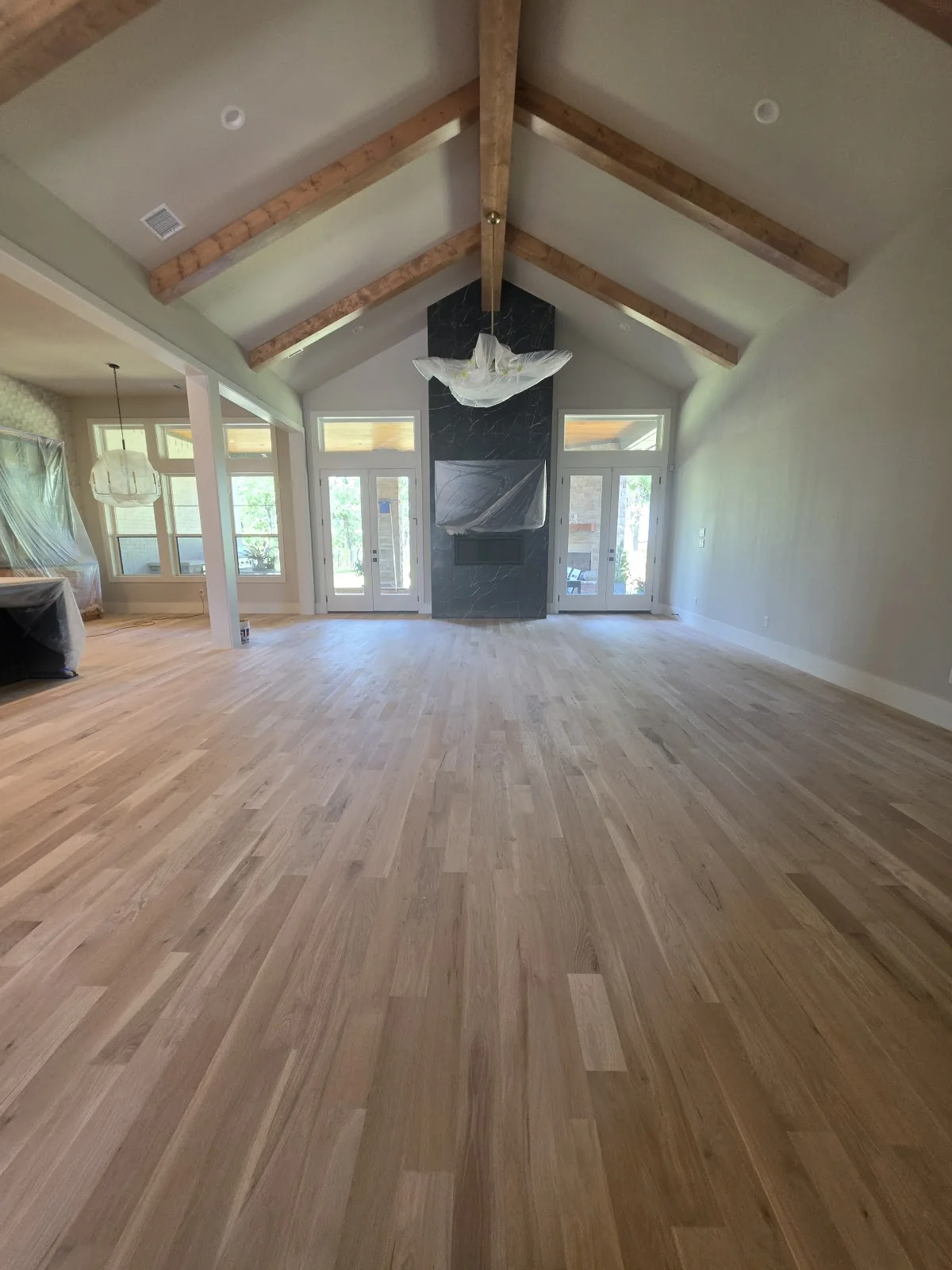
Once installed, most homeowners and buyers can't tell solid and engineered hardwood apart just by looking or walking on them, both offer the same genuine wood grain, warmth, and color options from brands like Mohawk and Mannington. From a resale standpoint, both are viewed favorably by buyers; the choice tends to come down to your home's construction and where the flooring is going rather than which one "looks nicer."
How We Help You Decide
This is exactly the kind of decision that benefits from an in-person conversation rather than research alone, since your home's slab, subfloor, and moisture conditions all factor in. During a free in-home estimate, we'll look at your specific rooms, explain which option makes sense where, and let you compare real solid and engineered samples side by side before you decide anything.
See and feel the difference between solid and engineered hardwood in your own home.
Book Your Free In-Home EstimateNeither option is universally "better," they're built for different situations. Let us help you match the right one to your home, and see what other Denton County homeowners have said about the process on our reviews page.